Hindu Swayamsevak Sangh - NederlandSanskar · Sewa · Sangathan
Press Releases deliver clear, confident, and authoritative updates on our activities, events, and public positions reflecting our commitment to integrity, transparency, and unwavering dedication to serving society and preserving our cultural values.
 11 May 2026
 HSS Nederland
There is a word that sits at the very heart of what HSS Nederland does, a word that appears in our motto, in our programs, and in the aspirations we hold for every child and family we serve. That word is Sanskar. And yet, for all its centrality, it is one of the most frequently misunderstood concepts in the Hindu vocabulary, even among those who use it regularly. Sanskar is typically translated as 'values' or 'cultural refinement.' These translations are not wrong, but they are insufficient. They capture the outcome without conveying the process. They name the destination without describing the journey. In this article, I want to explore what Sanskar actually means: at its philosophical roots, in its practical expression, and in its profound relevance to the challenges of contemporary life. My argument is straightforward: Sanskar is not merely a Hindu concept. It is a universal framework for human development, one that the contemporary world, for all its sophistication, has largely lost and urgently needs to recover. Sanskar does not describe what a person knows. It describes what a person has become. What Sanskar Actually Means The Sanskrit root of Sanskar is 'samyak-karanam', meaning literally 'that which refines' or 'that which purifies and perfects.' In ancient Indian thought, Sanskar referred to the rites of passage (samskaras) that marked and shaped the transitions of a human life: birth, naming, first learning, marriage, death. These rites were not merely ceremonial. They were understood as acts of formation, moments in which the community gathered to intentionally shape a person's passage from one stage of life to the next. Over time, Sanskar came to mean something broader: the totality of impressions, habits, and dispositions that are formed in a person through repeated experience, example, and environment. A person with good Sanskar is not someone who knows the right things. It is someone who has been so shaped by their upbringing, their community, and their practice that right action has become natural, second nature as we say in English, though the Hindu concept goes deeper than that phrase implies. This is a crucial distinction. Sanskar does not describe what a person knows. It describes what a person has become. It is not information; it is formation. And this distinction, between knowing and becoming, is one of the most important and neglected distinctions in contemporary education and culture. The Crisis of Formation in Modern Life Modern Western culture has, over the past several centuries, made an enormous investment in the transmission of knowledge. Our schools are sophisticated knowledge-transfer institutions. Our universities are among the most impressive engines of intellectual production in human history. We have more access to more information than any civilization before us. And yet, by many measures, we are in a crisis of character. Rates of anxiety, loneliness, and purposelessness, particularly among young people, are at historic highs in wealthy Western societies. Social trust is declining. Civic life is fragmenting. The basic competencies of a flourishing human life, sustained attention, delayed gratification, committed relationship, appear to be weakening precisely in the societies that have invested most heavily in formal education. The Hindu tradition offers a diagnosis for this paradox, and it is implicit in the concept of Sanskar: knowledge without formation produces educated confusion rather than wisdom. A person who knows what is right but has not been formed to do what is right is not a fully developed human being. They are, in the Hindu framework, lacking in Sanskar, regardless of their academic credentials or intellectual sophistication. How Sanskar Is Formed: The Role of Environment, Example, and Practice If Sanskar is formation rather than information, then the question of how it is transmitted becomes paramount. The Hindu tradition is remarkably clear on this question. Sanskar is formed through three interlocking forces: Vaatavaran (environment), Adarsha (example), and Abhyaas (practice). Environment (Vaatavaran) We become, in significant part, what our environment consistently presents to us. A child raised in an environment where service is normal will absorb service as normal. A child raised where honesty is consistently practised will find honesty natural. This is why the community environment of the Shakha is not incidental to character development; it is constitutive of it. The environment of the Shakha is intentionally designed to present certain values as normal, natural, and beautiful. Example (Adarsha) Human beings are profoundly imitative. We become, in large part, what we see modelled around us. This is why the Hindu tradition places such emphasis on the role of role models, not only the great figures of history and itihasa, but the living example of parents, teachers, and mentors. In the Shakha, Karyakartas and Sevikas are not primarily instructors. They are exemplars, people whose conduct, discipline, and warmth invite children into the kind of life that the tradition commends. Practice (Abhyaas) Character is not formed by understanding; it is formed by doing, repeatedly, consistently, over time. The Shakha's structure of weekly physical training, games, storytelling, and discussion is not simply a program. It is a practice regimen for the character. The child who does Surya Namaskar every week is not merely becoming physically disciplined; they are forming habits of body and mind that will serve them throughout their life. The child who helps a younger peer navigate a game is not merely being kind in that moment; they are practising kindness until it becomes natural. This understanding, that character is formed through practice rather than instruction, is one of the deepest insights of the Hindu tradition, and one that modern developmental psychology is only now beginning to recover. The goal of Sanskar is not compliance with a code. It is the freedom that comes from having been so thoroughly formed by good values that right action flows without effort. Sanskar and Freedom: A Paradox Resolved There is an apparent paradox in the concept of Sanskar that is worth addressing directly, because it is a source of genuine confusion, especially for young people raised in Western cultures that prize individual autonomy above all. The paradox is this: Sanskar involves being shaped and formed by forces outside the self, namely community, tradition, and practice. Does this not constrain freedom? Is it not a form of cultural conditioning that limits the authentic self-expression that modern culture values so highly? The Hindu tradition offers a profound response to this question, one rooted in the understanding of the relationship between discipline and freedom. A musician who has practised scales for ten thousand hours is not constrained by that practice; she is liberated by it. The discipline has given her access to a freedom of musical expression that is impossible without it. The same is true of character. A person formed in good Sanskar does not experience ethical action as constraint; they experience it as expression. Right action has become who they are. The goal of Sanskar is not compliance with a code. It is the freedom that comes from having been so thoroughly formed by good values that right action flows without effort. This is what the Bhagavad Gita calls the state of the sthitaprajna, the one whose intelligence is established, who acts from the deep ground of their being rather than from the turbulence of passing desires and fears. Sanskar in the Context of HSS Nederland For HSS Nederland, Sanskar is not an abstract philosophical ideal. It is a living, practical commitment expressed through everything we do: the structure of our Shakhas, the character of our Karyakartas, the content of our programs, the relationships we build between families. Every story told in a Balgokulam session is a small act of Sanskar formation, planting a seed of dharmic imagination in a child's developing character. Every Surya Namaskar practiced together is a formation of discipline and reverence. Every Sewa project in which a family participates is a practice of compassion made habitual. Every festival celebrated with understanding rather than mere performance is a deepening of cultural identity. The cumulative effect of these practices, over months and years, is what produces a person of Sanskar: someone who Carries their heritage with confidence and joy, not defensiveness or apology Acts with integrity not because they have been instructed to, but because integrity has become natural to them Contributes to their community not from obligation, but from genuine care Navigates the complexity of modern life, its pressures, its distractions, its moral ambiguities, with a stable sense of who they are and what they stand for This is the human being that HSS Nederland aims to help form. Not a perfect human being, as that is not a meaningful goal. But a grounded one. A rooted one. One who can flourish precisely because they have been formed by something larger and deeper than themselves. A Call to Intentional Formation I want to close with a direct address to the Hindu families of the Netherlands who may be reading this. The formation of your children's character will not happen by accident. In a cultural environment that is largely indifferent, and in some respects actively hostile, to the values you hold, formation requires intention. It requires community. It requires practice. The forces shaping your children's character every day, through screens, through peer culture, through the implicit values of the institutions they inhabit, are powerful and largely unacknowledged. The question is not whether your children will be formed. They will be. The question is whether they will be formed by intention or by default. Sanskar, understood properly, is not a relic of the past. It is a sophisticated, proven, and urgently needed framework for intentional human formation. It is what HSS Nederland offers, in practical form, through every Shakha, every Sewa project, every gathering of families committed to raising children who are rooted, strong, compassionate, and free. The tradition is alive. The invitation is open. The work of formation begins now.
 Reclaiming the depth and practical wisdom of a tradition that the contemporary world urgently needs
 11 May 2026HSS Nederland
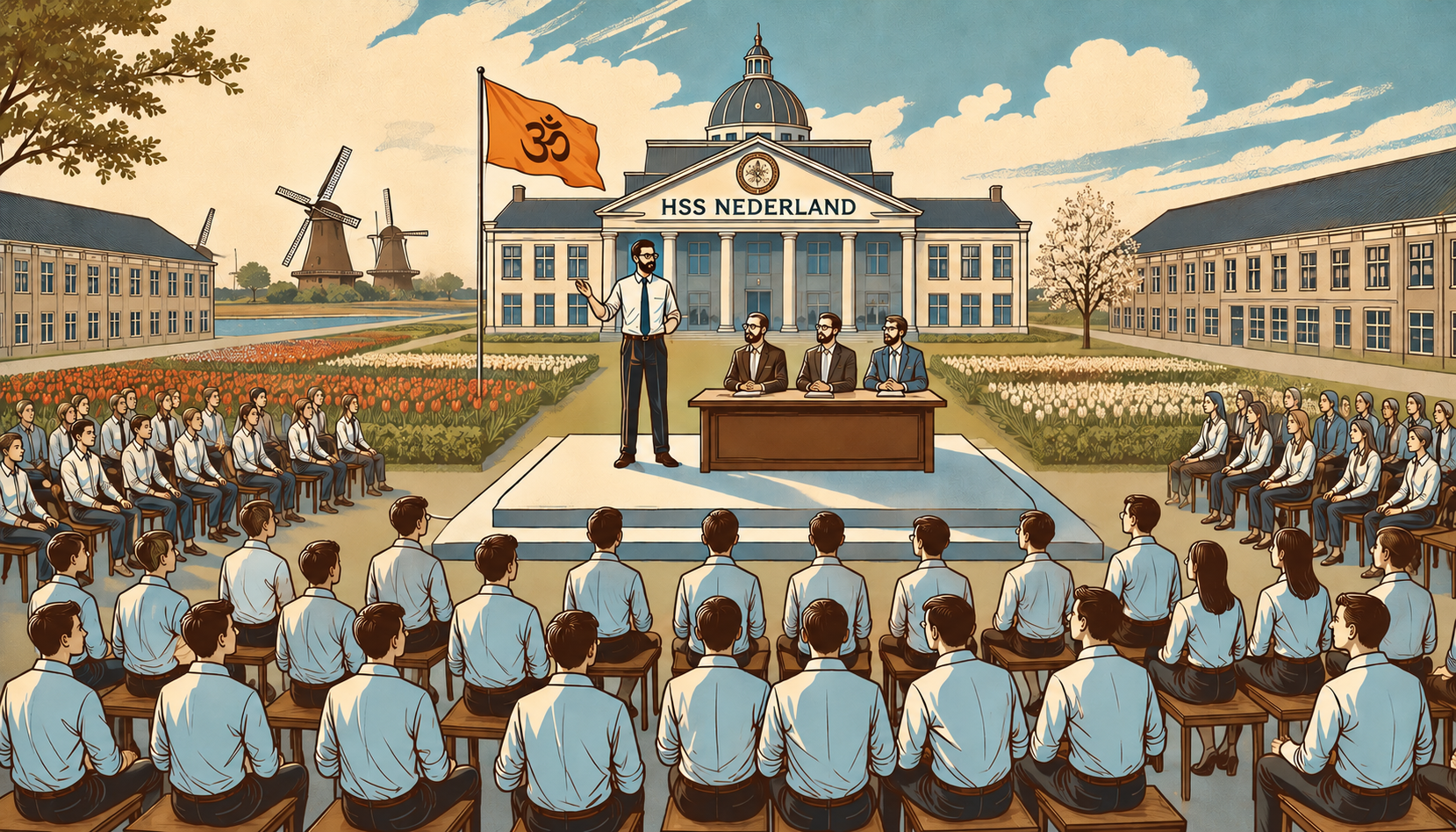
In every generation, institutions face a fundamental test: can they remain relevant without sacrificing their essence? For the Hindu Swayamsevak Sangh, the Shakha (the weekly gathering at the heart of HSS activity) has passed that test for a century. In the context of the Hindu diaspora in the Netherlands and across Western Europe, this test has never been more urgent or more consequential. Hindu families in the Netherlands today raise children who are simultaneously at home in multiple worlds: Dutch society, Hindu tradition, global digital culture. The question is not whether their children can navigate these worlds. They do so every day. The deeper question is whether they navigate them with a stable, grounded sense of who they are, or whether identity becomes a source of confusion, compromise, and quiet loss. The Shakha, I would argue, is one of the most effective answers to that question available to Hindu communities anywhere in the world. This article sets out why. The Shakha does not teach culture as a museum piece. It transmits culture as a living practice: embodied, joyful, and communal. The Identity Deficit in the Diaspora Diaspora communities face what sociologists call an 'identity tax': the cognitive and emotional cost of maintaining a minority identity in a majority culture. For Hindu children in the Netherlands, this manifests in familiar ways. At school, the festivals they celebrate are unknown to their classmates. The values their parents hold (dharma, seva, respect for elders, reverence for nature) rarely appear in their curriculum. Over time, some children absorb the implicit message that their heritage is private, peripheral, perhaps even an obstacle to full belonging. The consequences are not merely personal. When identity is experienced as a burden rather than a resource, communities fragment. Cultural continuity breaks. The wisdom embedded in traditions, wisdom accumulated over millennia, is lost, not because it was wrong, but because it was never transmitted with confidence and joy. This is the deficit the Shakha addresses. Not through nostalgia or defensiveness, but through something far more powerful: the lived experience of belonging to a community rooted in shared values. What the Shakha Actually Does It is worth describing the Shakha concretely, because it is easily misunderstood by those who have not experienced it. A Shakha is not a religious instruction class. It is not a lecture series. It is not a cultural performance. It is, above all, a weekly gathering in which children and youth are invited to grow, physically, intellectually, morally, and spiritually, in the company of peers and mentors who share their heritage. A typical Shakha session might include: Surya Namaskar and yogasanas: building physical discipline and bodily awareness Group games rooted in Bharatiya tradition: cultivating teamwork, strategy, and joyful competition Geet and bhajans: connecting children to Sanskrit, to music, and to the emotional register of Hindu devotion Baudhik: guided intellectual discussion on values, history, or dharmic themes Stories from the Ramayana, Mahabharata, or the lives of saints and heroes: transmitting moral frameworks through narrative None of these elements is incidental. Together, they constitute a pedagogy that has been refined over a hundred years, one that engages the whole person: body, mind, heart, and spirit. This is what HSS calls the fourfold development of Sharir, Man, Buddhi, and Atma. The genius of this approach is that it does not separate values from activity. Children do not sit and learn about courage; they experience it when they speak in front of their peers for the first time. They do not read about service; they practice it when they help younger children in the group. Character is not instructed; it is formed through repeated, embodied practice in a safe and affirming community. The Shakha as a Third Space Urban sociologists speak of 'third places': spaces beyond home and work (or, for children, home and school) that anchor civic life and social belonging. For Hindu children in the Netherlands, the Shakha functions as precisely this kind of third space. It is neither the private world of the family nor the public world of Dutch institutions. It is a communal space where Hindu identity is neither hidden nor defensive, but simply, naturally present. This matters enormously. Children who experience their cultural identity as something celebrated and alive, rather than something explained and defended, carry that identity differently. It becomes a source of strength rather than a source of self-consciousness. They can be fully Dutch and fully Hindu, not because they have found a clever compromise, but because they have been formed in a community where both are taken seriously. For parents, the Shakha offers something equally valuable: a network of families navigating the same questions, a community of trust, and the assurance that the values they hold most dearly are being transmitted not only by them, but by a living tradition larger than any single household. Character is not instructed; it is formed through repeated, embodied practice in a safe and affirming community. Leadership Emerging from Responsibility One of the least visible but most transformative dimensions of the Shakha is its approach to leadership development. In most institutional settings, leadership is positional: you are appointed to a role and given authority. In the Shakha, leadership is relational and emergent. Children take on responsibilities naturally, leading a game, coordinating a session, mentoring younger participants, and through those responsibilities they develop the confidence, judgment, and humility that constitute real leadership. This is not a trivial distinction. The Hindu community, like any minority community, needs leaders who can navigate complex institutions, represent their community with confidence, and contribute to the broader society without losing their moorings. The Shakha is one of the few environments that cultivates this kind of leadership systematically, over years, through lived experience rather than formal instruction. I have observed, over many years, the transformation that takes place in a young person who passes through a well-functioning Shakha. The child who arrived shy and uncertain becomes a teenager who speaks with clarity and conviction. The adolescent who struggled to articulate her identity becomes a young adult who embodies it. This transformation is not accidental. It is the fruit of an institution that takes seriously its responsibility to form the whole person. The Shakha in the Context of 100 Years of Sangh 2025 marked the centenary of the Sangh, a hundred years of the institution whose founding vision was, at its core, a vision of human flourishing through character, community, and service. It is worth pausing to consider what it means that an institution founded in Nagpur in 1925 is today holding Shakhas in Amsterdam, London, Toronto, and Singapore. The spread of the Shakha model to the diaspora is not mere institutional expansion. It is evidence of the model's essential soundness. The Shakha works, not because it is Hindu, but because it is human. It responds to deep needs that are universal: the need to belong, the need to grow, the need to contribute, the need to be held by something larger than oneself. The challenge for HSS Nederland, and for HSS communities everywhere, is to ensure that the Shakha continues to be what it has always been at its best: a living, breathing community of formation. Not a museum, not a performance, but a place where real human beings are shaped by real values in real relationships. Conclusion: An Invitation The identity questions facing Hindu families in the Netherlands today are not going away. If anything, the pressures of a globalised, digitalised world will intensify them. The Shakha does not resolve these questions, as no single institution can. But it provides something indispensable: a community in which those questions are held with confidence rather than anxiety, and in which the answers are lived rather than merely debated. For any Hindu family in the Netherlands that has wondered how to give their children both roots and wings, providing the deep security of cultural identity alongside the open confidence of engaged citizenship, the Shakha is, I would argue, not merely one option among many. It is one of the most proven, most human, and most hopeful options available. The doors of our Shakhas are open. The invitation is always there.
How a century-old institution answers the identity crisis facing Hindu youth in the West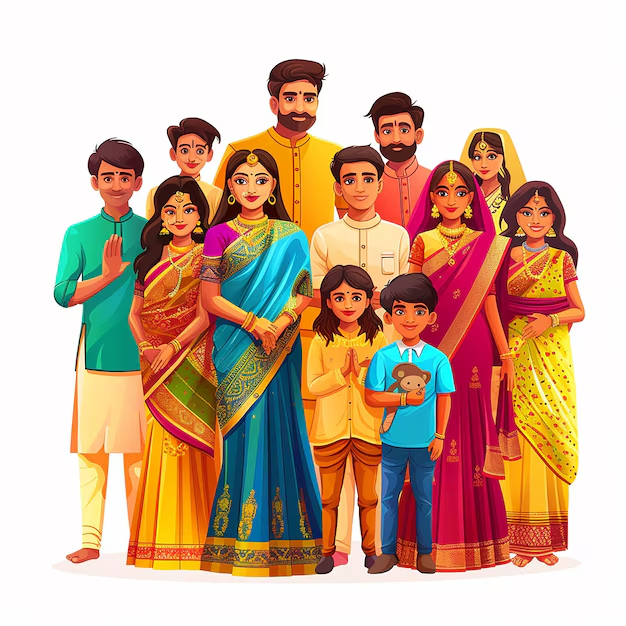 12 Oct 2025HSS Nederland
With great happiness, we are pleased to announce the final dates of the 1st Hindu Parivar Shivir in Netherlands 2026, a unique three-day residential program for Hindu families and individuals to connect with Hindu values, culture, and community spirit. Dates: 26, 27 & 28 June 2026 Location: Someren, Nederland Please save these dates in your agenda and plan to join us for this collective experience. We are glad to share that the venue has been confirmed and initial arrangements have already begun. The Hindu Parivar Shivir aims to bring together people of all ages to strengthen cultural roots, promote Sanskars, and build lasting bonds within the Hindu community in the Netherlands.
Celebrating Roots, Reinforcing Values 12 Oct 2025HSS Nederland
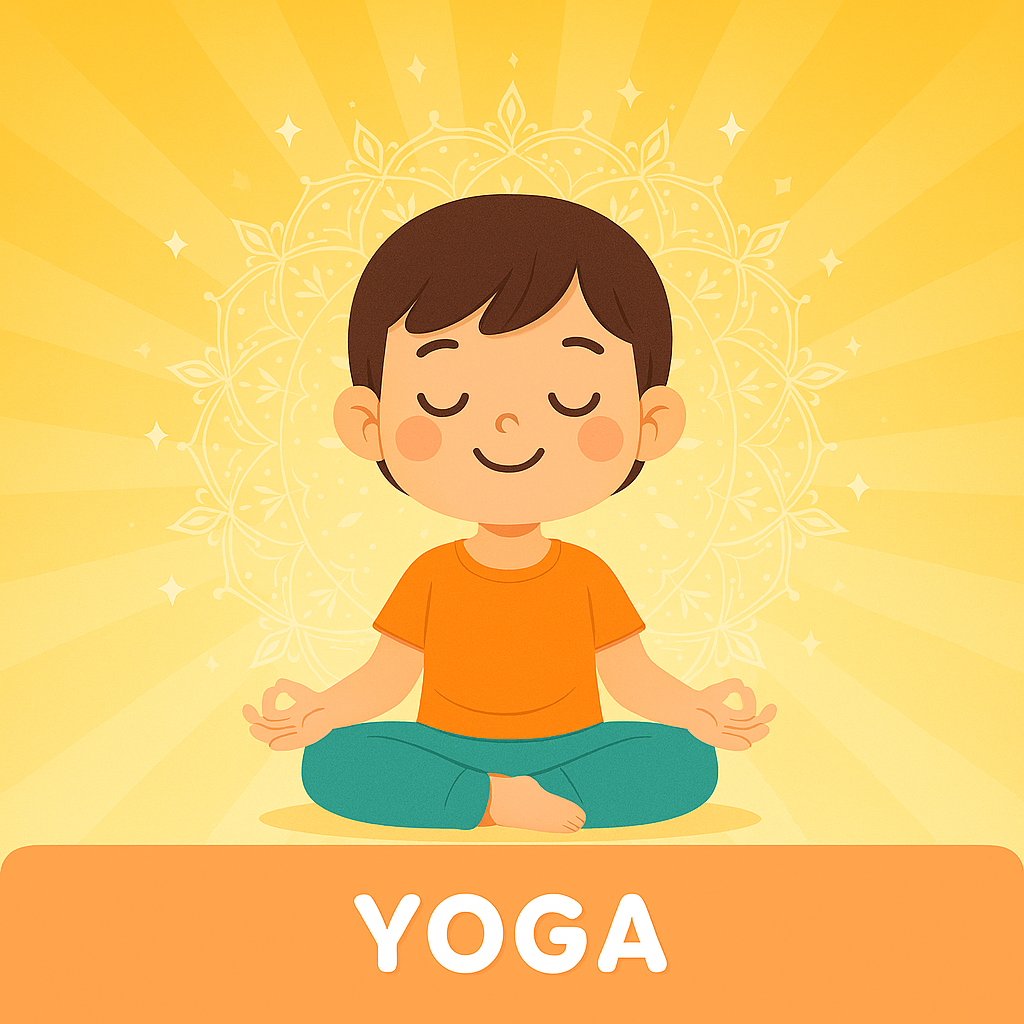
What is Balgokulam? Why is it important? Balgokulam is a weekly cultural and character‑building program by HSS Nederland that helps children and all age groups to grow physically, mentally, and spiritually through games, stories, yoga, and hindu values. A Balgokulam Shakha is one of the most valuable environments for children growing up in the Netherlands—especially Hindu families who want their children to grow with confidence, culture, character, and community . Why Balgokulam Shakha ? Raising children in the Netherlands offers immense opportunity, but also unique challenges. Hindu families often wonder how to give their children a strong foundation of values, confidence, cultural identity, and community while balancing modern life. 1. Building Strong Character -The Foundation of Life Every parent wants their child to grow into someone who is respectful, confident, grounded, and capable. Balgokulam does precisely that by teaching: Discipline through structured activities Respect and humility through stories and role models Teamwork through group games Leadership through responsibility-based activities Courage and self-confidence through speaking and performing in the group Sewa (service) as a natural part of life Here, values are not taught through lectures—they are experienced and practiced . 2. Staying Connected with Hindu Culture in a Global World Children growing up in Europe often have limited exposure to Hindu traditions. Balgokulam creates a positive, fun environment for children to connect with: Stories from Ramayana, Mahabharata, Puranas Bhajans, shlokas, and Sanskrit basics The meaning of festivals and rituals Inspiring teachings from Hindu saints, gurus, and heroes This connection helps children develop a strong sense of identity and pride in their heritage- while thriving in Dutch society. 3. Physical Fitness Through Fun and Play Every Shakha starts with activities that energize the body and refresh the mind: Surya Namaskar Yogasana Fun group games Balance and coordination activities These build strength, agility, and confidence and help children learn healthy habits early in life. 4. Leadership Development at a Young Age In school, leadership may be optional. In Shakha, it is nurtured naturally . Children get opportunities to: Lead a group Speak in front of others Organize games Help younger children Take responsibility for small tasks These experiences create confident, responsible young leaders skills that last a lifetime. 5. A Supportive Community for Families Balgokulam doesn’t only strengthen the child it supports the entire family. Parents find: Like‑minded families A safe environment for their children A community rooted in shared values Cultural support far from home Children find: New friendships Belonging A second home This community feeling is one of the most beautiful gifts of Shakha. 6. A Positive and Safe Space in a Digital World With rising screen time and isolation among children, Balgokulam offers: Real human interaction Meaningful friendships Time away from mobile and tablets Positive role models A structured, safe, and inspiring environment Parents see noticeable changes in focus, discipline, and behaviour. 7. A Balanced Personality for Modern Life The unique strength of Balgokulam Shakha is its holistic approach. Children grow in four dimensions: Sharir (Body) – Fitness, strength, coordination Man (Mind) – Focus, discipline, confidence Buddhi (Intellect) – Values, stories, knowledge Atma (Spirit) – Identity, culture, spirituality This balance creates children who are rooted yet modern, confident yet humble —ready to succeed in every field of life. A Simple Idea, A Timeless Impact Balgokulam Shakha is more than an activity. It is a movement to build strong individuals and a strong community . It helps children become: Physically healthy Mentally focused Culturally connected Morally grounded Spiritually aware Socially responsible This is the vision of HSS Nederland—and Balgokulam is where it begins. "Balgokulam Shakha helps children grow into strong, confident, disciplined, and culturally rooted individuals through games, yoga, stories, and Hindu values."
Shaping Character Through Play, Culture, and Values 11 Oct 2025HSS Nederland
Introduction Hindu Swayamsevak Sangh (HSS) Nederland continues to strengthen its commitment to Sewa - selfless service rooted in the values of “Nar Sewa, Narayan Sewa.” Across the Netherlands, volunteers of all ages come together to serve society with humility, responsibility, and dedication. Through year‑round initiatives, HSS Nederland aims to uplift communities, support families in need, and promote compassion, unity, and collective well‑being. 1. Environmental Sewa (Family & Community Participation) Environmental responsibility is a core aspect of HSS values. Major Activities: Park and neighborhood clean‑up drives with involvement of children and families. Tree‑plantation initiatives ( “Vruksha Ropan Sewa” ). Awareness programs on sustainability and eco‑friendly living. These activities inspire children (Bal swayamsevaks and shiksharthis) to develop lifelong respect for nature. 2. Blood Donation & Health Awareness HSS Nederland actively promotes wellness and public health through community‑focused Sewa. Highlights: Coordinating blood donation drives in partnership with Sanquin. Conducting awareness sessions on healthy lifestyle , yoga, and mental well‑being. Supporting individuals in the community during medical emergencies . This health‑driven Sewa demonstrates HSS’s commitment to saving lives and encouraging holistic well‑being. 3. Cultural & Educational Support Serving the community also means preserving culture and supporting learning. Activities include: Providing volunteers for language classes , workshops, and cultural programs. Helping new families integrate into Dutch society with guidance on schools, childcare, and housing. Organizing Sanskar Vargs , character‑building workshops, and youth leadership development. This Sewa strengthens cultural confidence and community harmony. 4. Emergency Response & Humanitarian Relief During humanitarian challenges, HSS Nederland mobilizes quickly to offer support. Examples: Fundraising and awareness campaigns for communities affected by natural disasters abroad. Supporting refugees and vulnerable families with essential items. Online Sewa campaigns during global crises to support relief organizations. These actions reflect HSS’s global commitment to compassion and service. 5. Sewa During Festivals & Special Occasions Festivals serve as meaningful opportunities to give back to society. Activities: Diwali Sewa: distributing sweets and gifts to elderly homes and shelters. Vijayadashami & Raksha Bandhan: visiting police, firefighters, and hospital staff to express gratitude. Organizing charity collections during major programs and gatherings. These actions connect cultural celebration with social responsibility. Voices of Volunteers “ Sewa gives me purpose and joy. It teaches my children the meaning of giving without expecting anything in return. ” - Karyakarta, Utrecht Shakha “ Sewa is not just an activity—it is a mindset we carry in our daily life. ” - Karyakarta, Amsterdam Shakha Through its diverse Sewa initiatives, HSS Nederland continues to uphold timeless Hindu values of compassion, discipline, and collective upliftment. Every act of service—big or small—strengthens the social fabric of the nation. With the guiding principle “Vasudhaiva Kutumbakam — The World is One Family,” HSS Nederland remains committed to building a caring, inclusive, and harmonious society.
From Heart to Society -Sewa in Every ActionWe foster ज्ञानं (knowledge), साहसं (courage), and सेवा (service) in children. Rooted in tradition and unity (एकता), we build strong character and bright futures. Together, we nurture young leaders who carry forward culture with pride and discipline.



A Hindu Swayamsevak Sangh (HSS) shakha is a local gathering open to everyone - children, youth, adults, and families - where participants engage in physical, intellectual, and cultural activities rooted in Hindu values. Shakha promote discipline, leadership, and community service through games, yoga, discussions, sanskar and sewa.
HSS Shakha guided by the principle of Vasudhaiva Kutumbakam - “the world is one family” they serve as vibrant hubs for character building, cultural continuity, and positive community impact.
HSS shakha are active across multiple cities in the Netherlands.
📍 Explore our locations and find a shakha near you!
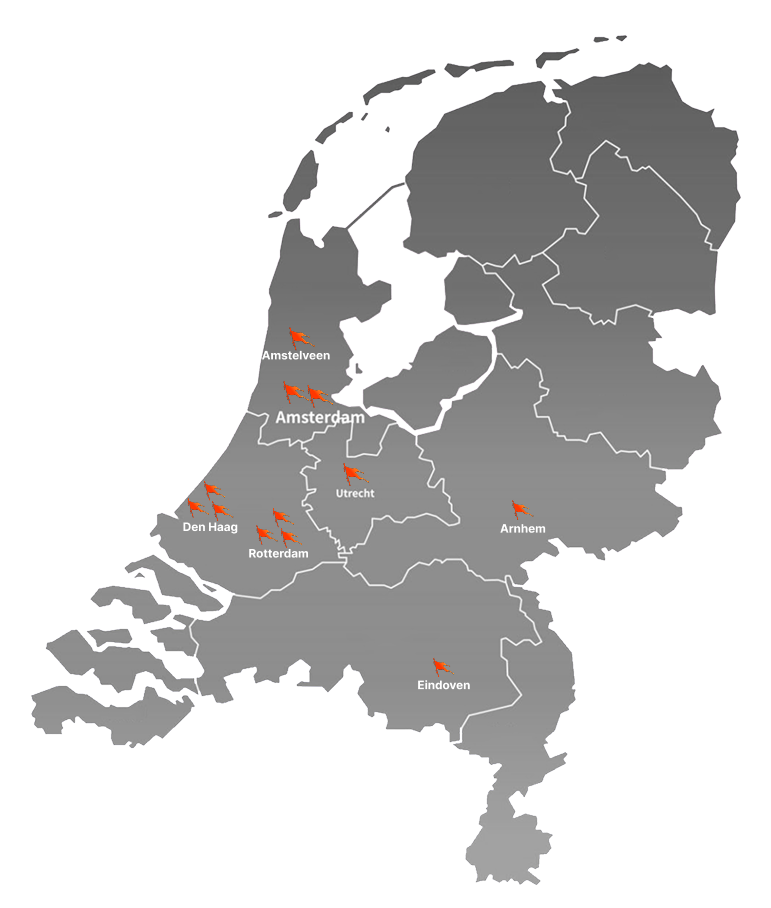

Amsterdam
Bijlmer Oost
Amstelveen
In de Wolkenbuurt
Utrecht
Terwijde
Den Haag
Mariahoeve , Transvaal, Schiderswijk
Rotterdam
Zevenkamp, Bospolder , Bospolder
Arnhem
Rijkerswoerd
Eindhoven
Mensfort
E-Millan (Online)
Nederland